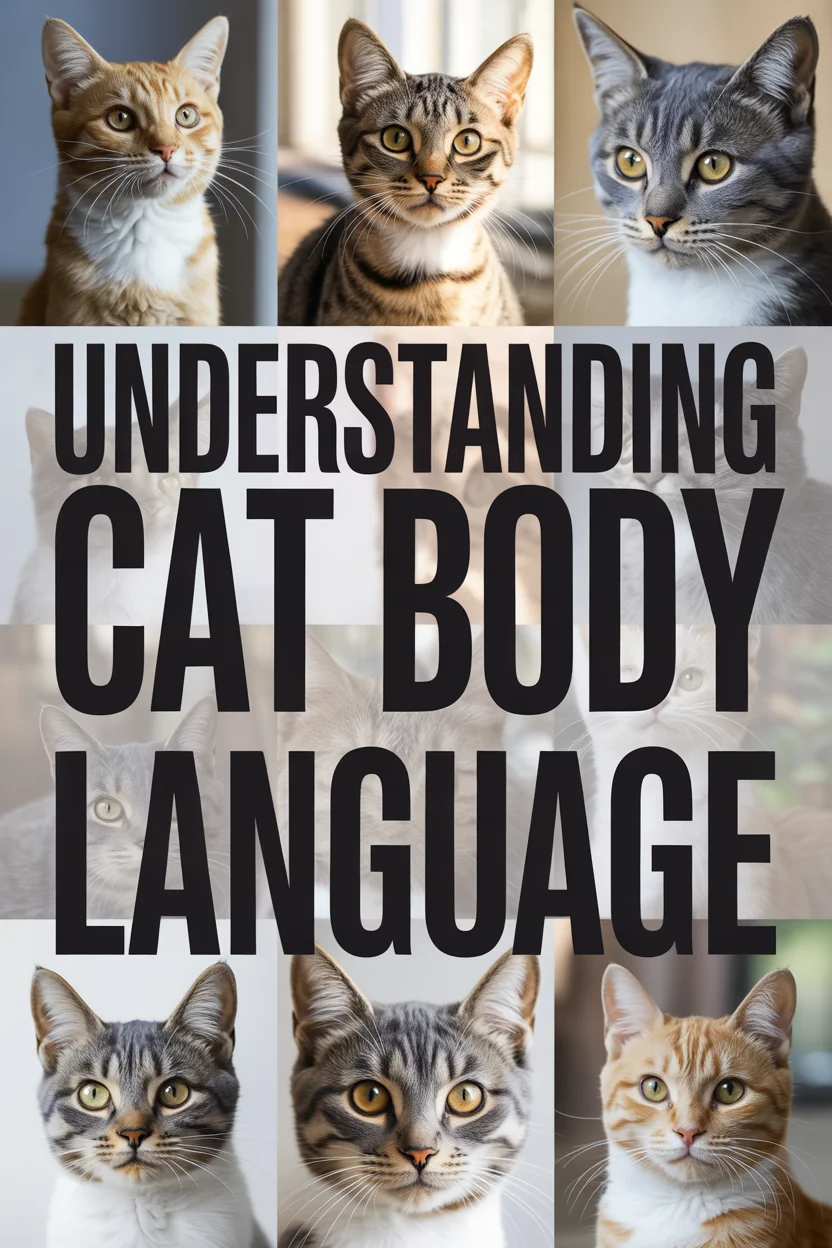


Understanding cat body language—oh, it can feel like cracking a secret code sometimes, can’t it? One minute your cat’s sniffing your hand, the next she’s kicking over your water glass—classic. If you’ve ever stared at your furry pal and wondered, “Is that a slow blink or am I being judged?” you’re in the right place. Learning to read what your cat is really saying (without words, because, well, cats) can majorly improve your bond—and keep your hands scratch-free. Speaking of decoding quirky cat signals, check out this cat behavior training guide I love, or—as a fun detour—see if cats can actually spot their crunchies in the dark here: can cats see in the dark.

Understanding the Context of Cat Behavior & Body Language
First up—context matters. Cats are like puzzles where the picture keeps changing.
- Watch for what’s going on around your cat. Is it mealtime, playtime, or “I require absolute silence” hour?
- Mood can change fast—noise, new people, or even seeing a bird out the window can flip their vibe.
- Each cat’s a bit of a wildcard—some are drama queens, some just…sleep a lot.
- Don’t just look at the tail or ears—try the whole kitty picture!

Happy Cat Body Language
Okay, I get gushy about this because a happy cat is just a joy.
- Relaxed eyes (not those saucer-shaped “alien” eyes), and gentle blinking? She’s chill.
- Flopped on her side, maybe exposing that fuzzy belly—not always an invite, but she trusts you.
- Tail up and sort of “hooked” at the tip means she’s happy to see you. Honest, it’s not a trick!
- Soft purring, gentle kneading…sometimes it’s like you’re at a five-star spa but covered in fur.
Signs that Your Cat is Unhappy
Yikes, this bit is important! Noticing these is honestly half the battle with cat shenanigans.
- Twitchy tail or thumping—think “angry flag-waving.”
- Ears flat to the side or back (airplane ears, I call them)—yeah, trouble brewing.
- Hissing or sudden swatting—for real, take a hint and back off.
- Stiff body, hiding, or dilated pupils: your cat’s not feeling the love—yet.
How to Read Your Cat’s Tail & Body Language
This is where it gets weird, but honestly, I never realized how much cats “talk” with their tails.
- Tail up = friendly. Fluffed like a bottlebrush = yikes, fear or anger.
- Low, tucked tail? She’s probably not having a good day.
- Quick, whip-like flicks—usually irritated, might want space.
- Pair the tail talk with eyes, ears, and whisker vibes to get the full story.
Purring
Alright—purring isn’t just for “I love you.” Here’s what I’ve learned after, oh, a thousand hours of lap-cat time.
- Soft, steady purrs usually mean happy and content, but—
- Cats also purr when nervous, hurt, or asking for comfort. Wild, huh?
- Context is everything! Otherwise, you’d think my cat loves the vet. (She does not.)
Common Questions
Q: Why does my cat flop, then bite me when I pet her belly?
Cats have, um, “surprise” zones. Belly’s often a trap—think of it like a tricky dessert. She might trust you, but keeping hands clear is smart.
Q: How can I tell if my cat is scared or just playing?
Look at the whole body. Fluffy fur, wide eyes, hissing—scared. If she’s chasing toys and doing “funny jumps,” that’s play.
Q: What does it mean if my cat stares at me and slowly blinks?
Oh, that’s basically a kitty “I like you.” Try blinking back, slow and lazy—feels weird but works!
Q: Is a flicking tail always a bad sign?
Not always, but rapid or strong flicks usually mean “leave me alone.” Learn her “tail dialect”—each cat’s a bit different.
Q: Can I actually learn to read my cat over time?
Absolutely. Heck, after a while you’ll notice things like “pre-pounce butt wiggling”—the stuff they never show in cartoons.
Ready to Crack the Kitty Code?
So, understanding cat body language is all about patience, play, and a little detective work. Don’t sweat the small clues; you’ll get it down with practice. Want more tips? The folks at PetMD lay things out real clear, and here’s a super detailed breakdown from Tuft & Paw, if you’re a cat behavior nerd like me. Or, if you just want something straightforward, Cat Behaviour Help & Advice is packed with advice you’ll actually use. So, keep watching, pet a little, and don’t be afraid to get it delightfully wrong sometimes. Cats aren’t judging…but they’ll let you know if you are.